
Best Local SEO Strategies for Small Businesses: 10 That Still Work in 2026
Ten local SEO strategies for a small business, ranked by effort and payoff, with the hours each one takes and which ones you can hand to Claude or software.

On this page
- What Are the Best Local SEO Strategies for a Small Business in 2026?
- Local SEO Strategies at a Glance: Effort, Payoff and Time
- 1. How Do I Set Up My Google Business Profile Properly?
- 2. Do I Need a Page for Every Service and Every Town?
- 3. Can One Page Rank for Several Services?
- 4. What Are Citations, and Does NAP Still Matter?
- 5. How Do I Get More Google Reviews Without Begging?
- 6. Why Should I Use a Call Tracking Number on My Website?
- 7. How Often Should I Check Search Console?
- 8. When Should a New Site Start Building Links?
- 9. What Should a Small Business Blog About?
- 10. Should I Keep Paying for Leads or Own the Website?
- Other ways to do this, and what they cost you in hours
- Quick Checklist
- Final Thoughts
Ten local SEO strategies that still work for a small business in 2026, ranked by effort and payoff, with how long each one takes and which ones you can hand to software.
What Are the Best Local SEO Strategies for a Small Business in 2026?
The best local SEO strategy for a small business in 2026 is a Google Business Profile set up properly, plus a website with one page per service and one page per town, checked every week in Search Console. The other seven strategies on this list support those three.
Local SEO means showing up when someone nearby searches for what you do, in the map results and in the normal results under them.
I often get asked for local SEO tips by owners. Plumbers, roofers, cleaning companies. What should I do first? What is worth my time? What can I skip? And how do I stop paying Angi, Thumbtack or Google's Local Services Ads for every lead?
A bit of context. I have done programmatic SEO (many pages built from templates and data) since 2016, and I run pay per call and rank and rent sites myself, local sites that earn from the calls they get. In the 90 days to Oct 5, 2026, our sites and our members' sites (486 tracked sites) had 11.08 million impressions, 17,969 clicks and 4,211 tracked calls. Individual results vary. This list is what I would do if I owned a plumbing company tomorrow.
So here is how I ranked them. The first two bring most of the calls, the middle ones make those two work harder, and the last one is the reason to do any of it.
In this post I will cover all ten, with what each one is, how long it takes (my estimate), and how Local Sites Pro and the MCP handle it, or why it stays manual. The MCP is the connector that lets Claude or ChatGPT work inside your Local Sites Pro account.
Local SEO Strategies at a Glance: Effort, Payoff and Time
| # | Strategy | Effort | Payoff | Time (my estimate) | Who does it |
|---|---|---|---|---|---|
| 1 | Google Business Profile done properly | Low | High | 1 to 2 hours to set up, my estimate | You |
| 2 | One page per service and per area | High by hand, low with software | Highest | 10 to 20 hours by hand (my estimate), about ten minutes with Local Sites Pro | Local Sites Pro |
| 3 | Sub-services stacked in titles | Low | Medium, mostly data | Under an hour, my estimate | You, in the dashboard or by chat |
| 4 | Citations with consistent NAP | Medium | Medium | 3 to 6 hours over the first month, my estimate | You or a freelancer |
| 5 | Reviews with a system | Low per job | High | An hour to set up, my estimate, then a minute per job | You |
| 6 | A tracking number | Low | High, because you learn what rings | Under an hour, my estimate | You |
| 7 | Search Console checked weekly | Low | High over time | A few minutes a week to approve | Claude proposes, you approve |
| 8 | Day -21 links for a new site | Medium | Medium to high | A few hours over three weeks, my estimate | You or a freelancer |
| 9 | One post a month from phone questions | Low | Medium | About an hour a month, my estimate | You, by chat |
| 10 | Own the asset, do not rent leads | A decision | Highest over years | None | You |
1. How Do I Set Up My Google Business Profile Properly?
Google Business Profile is the listing that shows your business in the map results. You set it up at business.google.com.
"Properly" means more than claiming it:
- The right primary category for the job you most want
- Every service you do, listed
- Your service areas, the towns you drive to, if you go to the customer
- Real hours, including when you take emergency calls
- Real photos: your truck, your team, your jobs
- A website link that points to the page that matches the profile
Time: 1 to 2 hours to set up properly (my estimate), then a few minutes a week to add photos and answer reviews.
This one stays manual. Local Sites Pro does not touch your profile. What the website does is make the profile believable, and rank for the services and towns the profile can't cover on its own. For a shop, clinic or restaurant, the profile does even more of the work. I wrote that version up in is local SEO essential for brick and mortar businesses.
2. Do I Need a Page for Every Service and Every Town?
Yes. This is the big one.
Someone searching "sump pump repair" in a town near you wants a page about sump pump repair, in that town. A homepage that lists eight services and says "serving the greater area" gives Google nothing specific to show.
So the plan is a homepage, one page per service, one page per town you serve, an FAQ, schema and internal links between all of it. Schema is code that tells Google your name, phone, services and area in a format it reads directly. Internal links are the links between your own pages, like the water heater page pointing to the towns you serve.
Narrow sites work. A one-service AC repair site in Mesa, AZ took 69 calls from 1,627 impressions (times it showed in Google) and 2 clicks in 90 days. Individual results vary.
Time: 10 to 20 hours by hand on WordPress (my estimate). With Local Sites Pro, you enter your niche, city, company name and phone, pick services and areas or let the AI suggest them, and most sites are live in about ten minutes. It writes the homepage, service pages, area pages, FAQs, schema and internal links, and US and Australian cities get local detail like neighborhoods, landmarks and climate. Every page is editable in the dashboard.
For area pages that say something real about the place, read hyperlocal SEO for small businesses. If you are a roofer, SEO for roofing companies has the full page plan for a roofing site. And if you are still not sure any of this is worth it, start with why local SEO is important for small business.
3. Can One Page Rank for Several Services?
It can show up for several, and that is useful even before it ranks well.
One small-town plumbing page with every sub-service in its title showed up for 78 different searches and 23,168 impressions in about 100 days. The town has about a thousand people. Search Console then showed which sub-services people searched most, and that told me what to build next. The full write-up is in multiple keywords in one title tag.
For an owner, the simple version: put the jobs a page covers in its title, its main heading and its first lines, then watch which ones get impressions. Only list jobs you do.
Time: under an hour (my estimate). In Local Sites Pro, every page title is editable in the dashboard, or Claude can propose new titles by chat through the MCP and apply them with update_page_content after you say yes. For finding the sub-services in the first place, see how to find keywords for local SEO.
4. What Are Citations, and Does NAP Still Matter?
A citation is any listing of your business name, address and phone number on another site: directories, map apps, industry sites. NAP is short for name, address and phone.
NAP still matters. Keep it exactly the same everywhere. Same spelling of the name, same suite number, same phone format. Mismatched details make it harder for Google to tell that all those listings are one business.
Time: 3 to 6 hours spread over the first month (my estimate), or less if you pay a freelancer.
This stays mostly manual. Local Sites Pro puts the same name and phone on every page and in the schema, so the website side matches. The listings elsewhere are yours to build. My guide on local citations covers which ones to start with.
5. How Do I Get More Google Reviews Without Begging?
Make asking part of finishing the job. A system beats a push once a year.
- Ask at the end of every job, in person, when the customer is happiest.
- Text the review link the same day. Keep a saved message so it takes seconds.
- Reply to every review, good or bad, in plain words.
Time: about an hour to set up the message and the habit (my estimate), then a minute per job.
This stays manual, and it should. I don't let AI write reviews, not on the profile and not on the website. A made-up review is a lie to the next customer. In how AI helps small businesses with local SEO I go through what AI should do for you and what it should not.
6. Why Should I Use a Call Tracking Number on My Website?
A call tracking number is a phone number that forwards to your real line and counts every call. Put one on the website and you know how many calls the website brought in, and when.
Without it you are guessing. With it, you can see whether the site rings before you spend another dollar or another hour on it.
Time: under an hour to set up (my estimate).
In Local Sites Pro, the call buttons use the number you enter, so a tracking number works on every button on every page.
7. How Often Should I Check Search Console?
Every week. Search Console is Google's free report on which searches show your site, where it ranks and how many people click.
Time: a few minutes a week to read and approve changes, once it's set up. Checking it by hand every week is the part people drop, so I hand the reading to Claude.
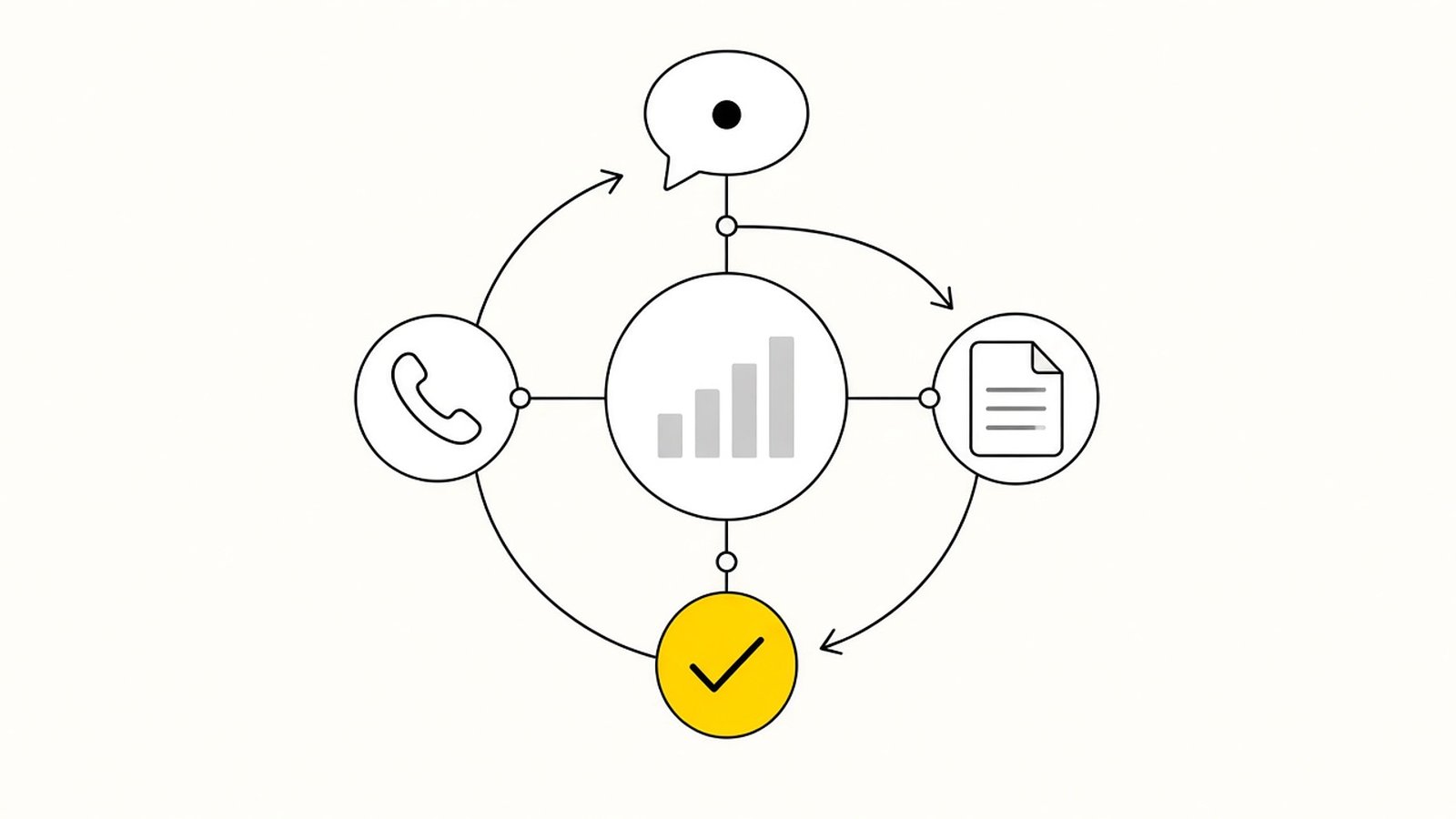
Here is the loop I use. Connect Search Console to Local Sites Pro in one click, and connect the MCP (https://app.localsites.pro/api/mcp) to Claude or ChatGPT. Then set a scheduled check every week. Claude pulls your queries with gsc_performance and uses gsc_opportunities to find pages with impressions and few clicks, at positions roughly 8 to 20. It proposes new titles, new H1s (the main heading on a page) or a new page, and waits for your yes before it runs update_page_content and publish_website. Claude proposes, you approve. In plain words, the website keeps getting better while you are on the job.
Claude works with this out of the box. ChatGPT needs Developer Mode turned on. More on the setup is on the MCP page.
8. When Should a New Site Start Building Links?
Before it goes live. I call it Day -21.
The site is built, but hidden from Google for about three weeks. In that time the first links go out (business profiles, citations, a few basic links) and get indexed, which means picked up by Google. Then you let Google in. The full method is in Day -21 backlinks for local sites.
Time: a few hours over those three weeks (my estimate), or a small budget for a freelancer.
The link building stays manual. Local Sites Pro builds the site, and you or a freelancer build the links.
9. What Should a Small Business Blog About?
The questions your callers already ask. One post a month is enough if the service and area pages are right.
On our recorded plumbing calls, about 40% of callers were shopping for a quote. Scheduling came next, and emergencies were about 12%. Individual results vary. So price and process questions make the best posts: what changes the price, how long the job takes, whether you charge to come out.
Time: about an hour a month (my estimate).
Local Sites Pro writes blog posts when it builds the site. To add one later, ask Claude in plain words, something like "add a post about frozen pipes in January", and it uses add_website_content to write it. Nothing goes live until you say yes and publish_website runs. The full plan is in content marketing for local businesses.
10. Should I Keep Paying for Leads or Own the Website?
Own the asset. A lead you buy is gone when you stop paying. A site you own keeps ringing.
Angi, Thumbtack and Local Services Ads all work, and you pay for every lead. A website that ranks can keep taking calls in a month you paid nothing for leads.
For a sense of what one site can do, this is my own number: "$50 to 100 a month for months from one single-city site. I have 100 of these." Individual results vary. That is from pay per call, where a network pays me per qualified call. For you, as the owner, the calls are your own jobs. Median job values quoted on our recorded calls were water damage $2,500, roofing $850, plumbing $225 and HVAC $125. Individual results vary.
Time: none. It's a decision.
If you'd rather do this for other owners, read how to sell SEO services to local businesses and local lead generation arbitrage with automated SEO.
Other ways to do this, and what they cost you in hours
Strategy 2 is where most of the hours go, so here is what the website costs you in time by each route. Every one of them can work.
| Route | What you do | Hours (my estimate) | Ongoing | Where it falls short for local SEO |
|---|---|---|---|---|
| Vibe code it with Claude or ChatGPT | Prompt page by page for HTML or a React app, buy a domain, set up hosting or Cloudflare Pages yourself, add images, forms, schema and a sitemap, then repeat per service and per town | 8 to 15 hours for a 15 to 25 page local site, my estimate | Fixes every time you want a new page | No service area structure, schema or internal links unless you ask for each one, and you run the hosting |
| Lovable or a similar AI app builder | Prompt a fast first page, then the rest | 4 to 8 hours, my estimate | A monthly subscription | Good for an app. A local lead site needs 20 to 40 interlinked pages with local copy, schema and a call button on every one |
| WordPress plus a theme | Hosting, theme, page builder, SEO plugin, security plugin, backups, then write every page | 10 to 20 hours to launch, my estimate | An hour or two a month to keep it updated and patched (my estimate), and the hosting bill is yours | Every service page, area page and FAQ is still yours to write and link |
| Hire a local SEO agency | Calls, a brief and page reviews while they build | A few hours of your time (my estimate), a few weeks to launch | Typically a setup fee plus a monthly retainer, ask for the number | The pages are written by someone who has never been in your truck |
| Local Sites Pro | Enter niche, city, company name and phone, pick services and areas or let the AI suggest them | About ten minutes to a live site | Starter $15 one-time for 3 sites, Pro $119 a year unlimited, hosting free on your own Cloudflare account | Profile, reviews and links stay yours to do. Edits in the dashboard or by chat through the MCP, and Search Console connects in one click |
The honest reading is that every route works if you do the work. The difference is hours, and whether the site keeps getting better after launch through the Search Console and MCP loop, or just sits there.
On cost: hosting is free on your own Cloudflare account. No hosting bill, no plugin updates, nothing to hack, nothing to speed up. The AI writing runs on your own OpenRouter key, typically under $1 a site, and Pro's $119 a year is a launch price (regular $219).
Quick Checklist
Here is the whole local SEO checklist in one place.
Final Thoughts
Most of local SEO for a small business is not hard any more. The profile and the reviews are yours to do. The pages, the schema and the weekly checking can be done by software you control, in your own words.
So pick the first two strategies this week and add one a week after that. In about two months the list is done, and the weekly check keeps proposing improvements while you are on the job.
Get the profile and the pages right, check Search Console every week, and own the site that rings.
Comments
Or discuss it in the Skool communityNo comments yet. Ask a question or share what you tried, and I will reply here.