
Local Lead Generation Arbitrage: How I Build It With Automated SEO
Produce a local call for less than it pays. Three ways to get paid, real costs and numbers from our sites, and the automated SEO loop I run every week.
On this page
- What Is Local Lead Generation Arbitrage?
- Three Ways to Get Paid for the Same Call
- What Does a Call Cost to Produce, and What Is It Worth?
- How Do I Pick the Niche and the City?
- The Build Loop: Data Site First, Then One Site per Winner
- How Much of Local Lead Generation Can Be Automated?
- Where Does Lead Generation Arbitrage Fail?
- Other ways to do this, and what they cost you in hours
- Quick Checklist
- Final Thoughts
Local lead generation arbitrage means you produce a phone call for less than someone will pay for it. Here is how I build that business with automated SEO, what it costs, what it pays, and where it loses money.
What Is Local Lead Generation Arbitrage?
Local lead generation arbitrage is producing a call from a local customer for less than a business or a network will pay you for it. You build a small website for one service in one city. It ranks, a homeowner calls, and someone pays you for that call. The gap between what the site cost you and what the call pays is your business.
I often get asked about this one. Is lead generation arbitrage still possible in 2026? Do I need to sell to contractors from day one? How much does it cost to start, and how long before the first call?
I have done programmatic SEO since 2016, and I run pay per call and rank and rent sites myself. In the 90 days to Oct 5, 2026, our sites and our members' sites took 4,211 tracked calls across 486 tracked sites. Individual results vary.
This post is for the builder: the person who wants to start a local lead generation business, not the plumber who wants more calls for his own company.
So, in this post I will cover the three ways to get paid for one call, the cost and the value of a call, how I pick the niche and the city, my build loop, what Local Sites Pro and Claude automate, and where this model fails. If you want the beginner version first, read my guide on how to start a local lead generation business.
Three Ways to Get Paid for the Same Call
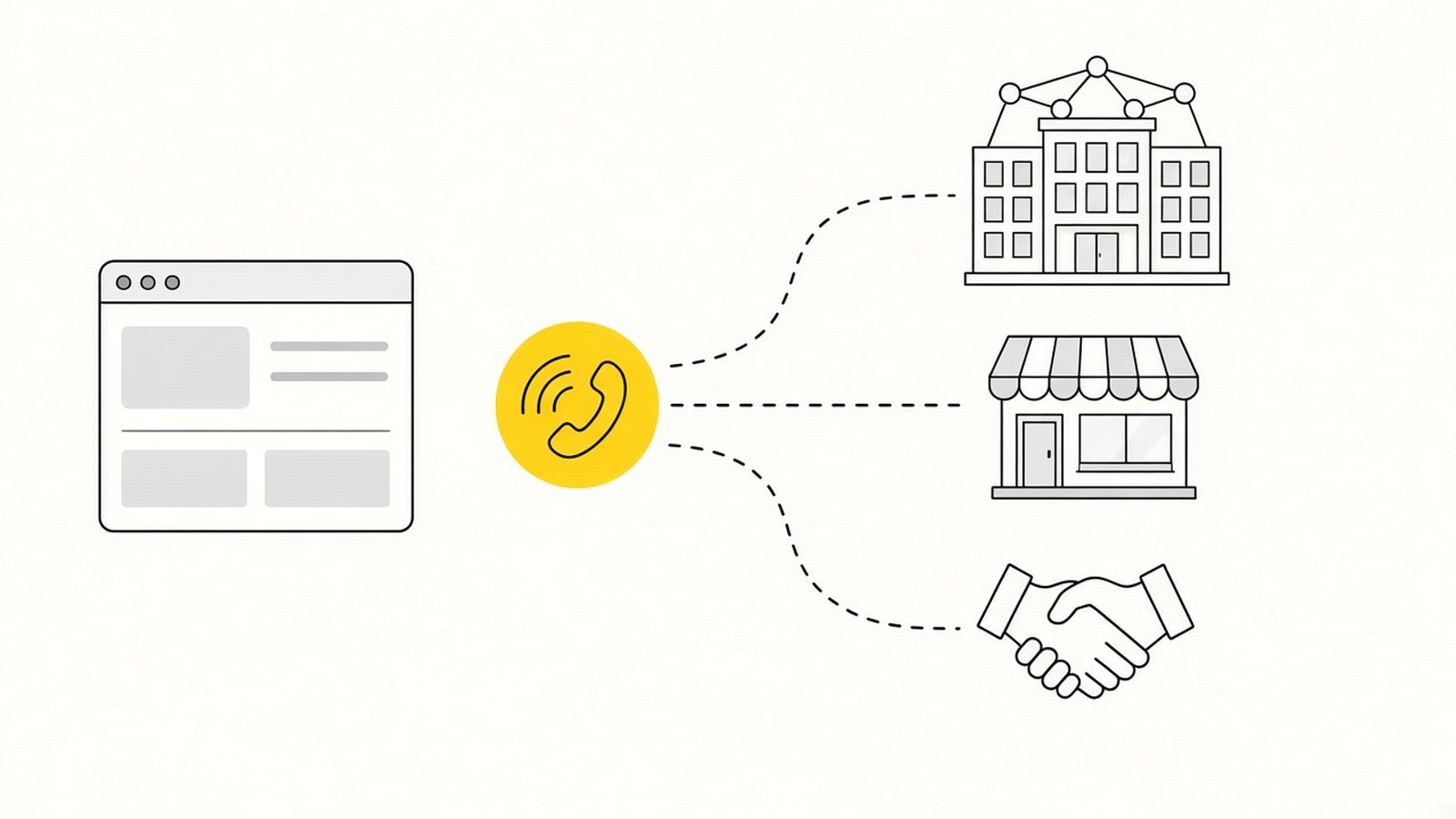
The site does not change. The phone rings the same way. What changes is who pays you.
1. A Pay Per Call Network
You put the network's tracking number on every call button. When someone calls, the network routes the call to a buyer with a live bid for that service in that zip code. If the call qualifies, the network pays you a fixed payout. You never talk to the buyer, never send an invoice and never chase a payment.
In our data, pay per call earns $8 to $88 per site per month. Individual results vary.
This is where I start every new site. The pay per call page shows how I set those sites up.
2. Rent the Site to One Business
Once the site rings, you show a local business the call log and rent them the whole site for a flat monthly fee. Our target range is $500 to $1,000 a month per rented site. Individual results vary.
You own the domain, the site and the number on it. If the business stops paying, you point the calls at the next one. The rank and rent page covers that model.
3. Sell the Leads per Call to a Local Business
This one sits between the other two. You keep the site, forward the calls to one local business and bill them for every call that qualifies. There is no network in the middle, so the price is between you and them. But you do the selling, you track every call, and you send the invoice every month.
Here is how the three compare:
| Way to get paid | Who finds the buyer | What it pays | What you do once the site ranks |
|---|---|---|---|
| Pay per call network | The network | $8 to $88 per site per month (our data) | Watch the call log |
| Rent the site | You | $500 to $1,000 a month per site (our target) | Sell, invoice, keep the renter happy |
| Sell per call | You | Whatever you agree per call | Sell, track every call, invoice monthly |
Individual results vary.
There is one line I keep repeating to members: "One site with 3 calls a week is hard to sell; five sites feeding one buyer is a business."
That is also why I start with the network. It sells the calls while I learn which sites deserve a local buyer. I compare the first two models side by side in rank and rent vs pay per call.
What Does a Call Cost to Produce, and What Is It Worth?
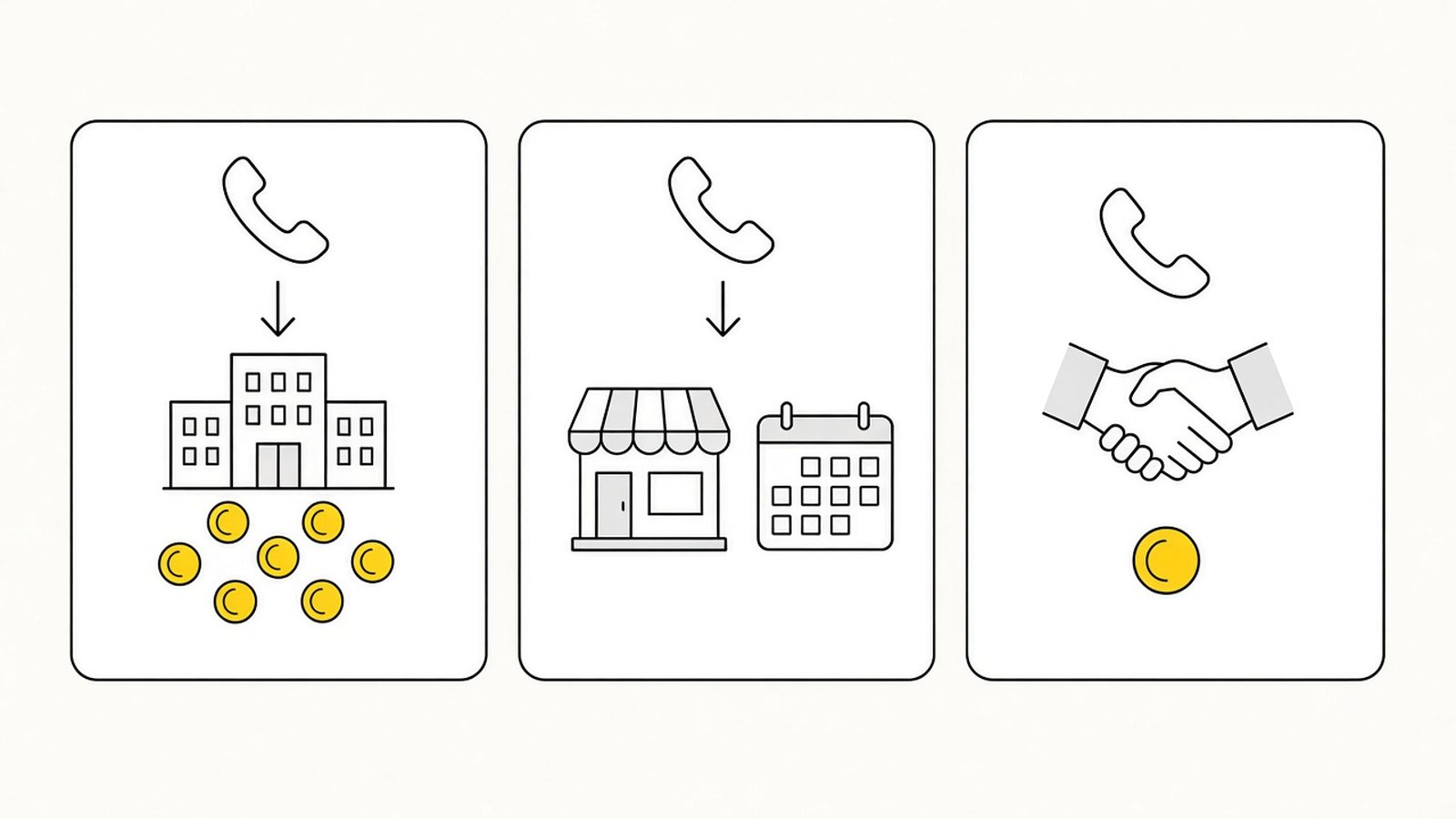
Arbitrage only works when you know both sides of the gap. Most new builders only look at the payout.
The Cost Side
Per site, built on Local Sites Pro, this is what you pay:
- A domain.
- Hosting: free on your own Cloudflare account, forever. No hosting bill, no plugin updates, nothing to hack, nothing to speed up.
- AI cost: it runs on your own OpenRouter key, typically under $1 a site.
- The plan: Starter is $15 one-time for 3 sites. Pro is $119 a year for unlimited sites, a launch price (regular $219). Both are on the pricing page.
- Links and citations, which cost you time and sometimes a little money.
A real batch, for scale: 51 pay per call sites built by AI through Local Sites Pro cost $652 and earned $422 in their first month. That is about 65% of the money back in month one. Individual results vary. Details are in the 51 pay per call sites case study.
The Worth Side
This is what the business on the other end of the phone makes from one call. These are median job values quoted on our recorded calls:
| Niche | Median job value quoted on recorded calls |
|---|---|
| Water damage | $2,500 |
| Roofing | $850 |
| Plumbing | $225 |
| HVAC | $125 |
Individual results vary.
That table is why the model works. A roofer who closes one $850 job from your site can afford a monthly rent. And you sit in the middle with a site that cost you a domain, under a dollar of AI and a slice of a plan.
For context, my own number: "$50 to 100 a month for months from one single-city site. I have 100 of these." Across everything we track, our sites and our members' sites have taken 30,497 calls to date, 12,049 of them paid by a buyer, with $332,357 paid out. Individual results vary.
How Do I Pick the Niche and the City?
Two rules. A micro niche, and a small city.
A micro niche is one narrow job inside a broad service. Not "plumbing", but water heater repair, sump pump repair, slab leak repair or drain cleaning. A narrow site is clear to Google and clear to the caller.
A small city usually has fewer established sites going after the same words, so a new site has a better chance to show up. You give up volume. You gain a site that can rank.
Before I build anything, I check buyer coverage for the zip and the vertical with the network. If nobody bids on that service in that zip, the call pays nothing, no matter how good the site is.
For the micro niche list, I listen to callers. These are the phrases plumbing callers said most on our recorded calls: "gas leak" 76 mentions, "leak detection" 64, "septic tank" 53, "water heater" 48, "sump pump" 23 and "garbage disposal" 21. Each one is a candidate for its own site.
Intent matters too. About 40% of plumbing calls are quote shopping, scheduling comes next, and emergencies are about 12%. A buyer wants all three, but your page should answer the price question, because that is the biggest single reason people ring.
This is lead generation for contractors, but you never have to cold call a contractor to start.
The Build Loop: Data Site First, Then One Site per Winner
Here is the loop I follow for every new city. The tools do most of it, and my part is saying yes or no.
- Pick the niche family and a small city. One broad service, one city, buyer coverage checked.
- Build one data site. Stack every sub-service the site serves into the homepage title, the H1 and the hero, and give each one its own service page. The site exists to collect data first and calls second.
- Let Search Console tell you the winners. After 2 to 4 weeks, group the queries by sub-service. A winner has a page-one position or the most impressions.
- Build one site per winner. One sub-service, one city, a short clean title meant to be clicked.
- Start the links before launch. I build links from Day -21, before the site is live. My Day -21 backlinks post explains the method.
- Put a call tracking number on every button. Local Sites Pro call buttons use the number you enter, so the network's tracking number sits on every page.
- Repeat in the next sub-service, then the next city.
Step 2 is the part people skip. One small-town plumbing page with every sub-service in its title showed for 78 queries and 23,168 impressions in about 100 days. No keyword tool would have shown me those queries for a town that size. The full breakdown is in my post on multiple keywords in one title tag.
Then the winners. A one-service AC repair site in Mesa, AZ took 69 calls from 1,627 impressions and 2 clicks in 90 days. Spokane, WA shows the same pattern with one-service sites: rodent control took 89 calls, roof moss removal 86 and water heater repair 39 in 90 days. Individual results vary.
Mesa had 2 clicks in Search Console and 69 calls. The number that pays you is calls, so that is the number I watch.
The broad site tells you which service. The narrow site takes the calls.
How Much of Local Lead Generation Can Be Automated?
Most of the build and most of the weekly check. Not the selling, and not the links.
The Build
In Local Sites Pro you enter the niche, the city, the company name and the phone number, then pick the services and areas, or let the AI suggest them. About ten minutes later you have a live site: homepage, one page per service, one page per area, FAQs, schema and internal links, with AI images. It deploys to your own Cloudflare account, where hosting is free.
There are 5 themes and 3 layouts per section, so ten sites in one city do not have to look like one template copied ten times.
Through the MCP, you can do the same by chatting with Claude or ChatGPT in your own language. Claude builds with create_website, and a dry run shows you the build brief and the cost before anything is created. Claude works out of the box. ChatGPT needs Developer Mode turned on.
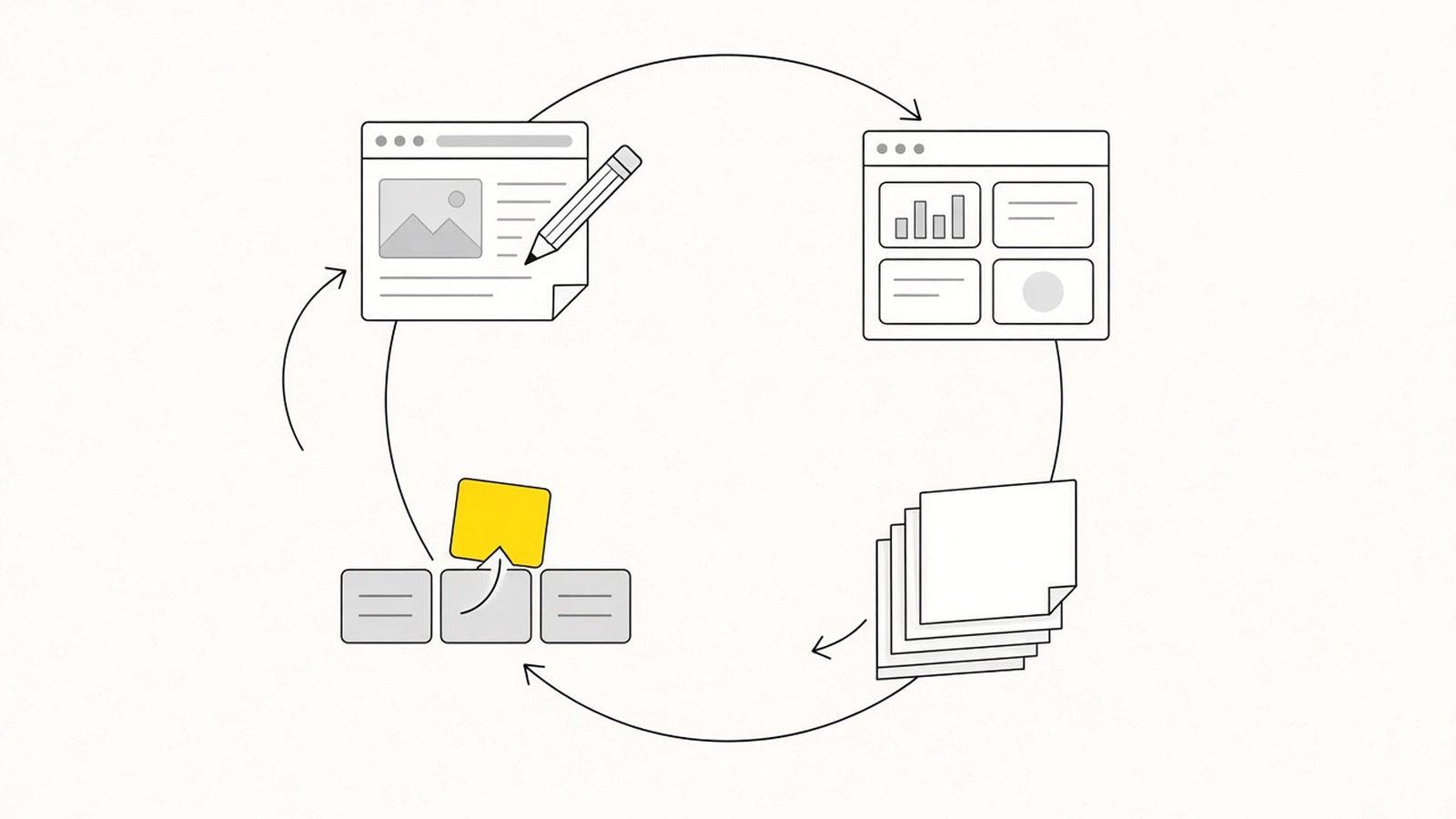
The Weekly Loop
This keeps the arbitrage alive after launch. Connect Search Console to Local Sites Pro in one click. Connect the MCP at https://app.localsites.pro/api/mcp to Claude or ChatGPT. Then set a scheduled check every week. Claude pulls the queries with gsc_performance, finds pages with impressions and few clicks with gsc_opportunities (positions roughly 8 to 20), and proposes new titles, H1s or a new page for a sub-service that is climbing. Then it waits. Nothing changes until I say yes, and only then does it run update_page_content and publish_website. Claude proposes, you approve. When I explain this to a contractor, I use his words: "the website keeps getting better while you are on the job."
What Stays Manual
- Picking the city and checking buyer coverage.
- Links and citations.
- Saying yes or no to every proposed change.
- Selling, if you rent sites or sell calls per lead.
Where Does Lead Generation Arbitrage Fail?
This model loses money in a few predictable ways. Our own case studies ran into most of them.
Calls with no buyer in the zip get $0. In our 72-site case study, local plumbing and septic sites took 100+ calls with $0 payout, because the calls did not qualify or had no buyer. Traffic was not the problem there. Coverage was. Individual results vary.
Broad sites underperform. In that same study, sites built on one narrow service (electrical repair, water heater repair, air duct cleaning) got paid calls within a month. The broad sites did not.
Timing. Fewer buyers are live on weekends and outside business hours. A call that rings at the wrong hour can reach nobody and go unpaid.
Time to rank. A new site takes weeks to months to show up. Plan your cash around it.
One site is not a business. I said it above. You need several sites feeding one area before a local buyer takes you seriously.
Renters leave. A rented site pays until the business stops paying. The network option is your fallback, which is one more reason to start there.
None of these kill the model. They kill a single site. That is why I build many small sites, read the data and double down on the ones that ring.
Other ways to do this, and what they cost you in hours
You do not need my tool for any of this. Here are the honest routes, per site. As a builder, multiply every hour figure by the number of sites you plan. Ten sites by hand is ten times the hours.
| Route | What you do | Hours (my estimate) | Ongoing | Where it falls short for local SEO |
|---|---|---|---|---|
| Vibe code it with Claude or ChatGPT | Prompt page by page, get HTML or a React app, buy a domain, set up hosting or Cloudflare Pages yourself, add images, forms, schema and a sitemap, then repeat per service and per town | 8 to 15 hours for a 15 to 25 page local site (my estimate) | Fixes every time you want a new page | No service area structure, schema or internal links unless you ask for each one, and you do the hosting |
| Lovable or a similar AI app builder | Get a fast first page, then build out the rest | 4 to 8 hours (my estimate) | A monthly subscription | Good for an app, but a local lead site needs 20 to 40 interlinked pages with local copy, schema and a call button on every one |
| WordPress plus a theme | Hosting, theme, page builder, SEO plugin, security plugin, backups, then write every page | 10 to 20 hours to launch (my estimate) | An hour or two a month to keep it updated and patched (my estimate) | Hosting is yours to pay, and every plugin is one more thing to update |
| Hire a local SEO agency | Brief them and wait a few weeks for launch | A few of your hours (my estimate), plus a few weeks of waiting | Typically a setup fee plus a monthly retainer, ask for the number | The pages are written by someone who has never been in your truck, and at 10 sites the fees stack up |
| Local Sites Pro | Enter niche, city, company name and phone, pick services and areas (or let the AI suggest them) | About ten minutes to a live site with homepage, service pages, area pages, FAQs, schema and internal links, on your own Cloudflare account | Starter $15 one-time for 3 sites, Pro $119 a year unlimited, edits in the dashboard or by chat through the MCP, Search Console in one click | It does not rank the site for you: links, citations, buyer coverage and patience are still on you |
The honest reading is that every route works if you do the work. The difference is hours, and whether the site keeps getting better after launch through the Search Console and MCP loop, or just sits there. For one site, the hours are fine either way. For thirty, they decide whether this is a business or a second job.
Quick Checklist
Final Thoughts
Lead generation arbitrage comes down to a small site that costs little to build, a call that is worth a lot to a local business, and the patience to build many sites and keep the ones that ring. The network pays for the first calls, and the renters come later, when you have proof.
So start small. Three sites, one city, one niche family, and a weekly check you approve. A lead you buy is gone when you stop paying. A site you own keeps ringing.
Build the call for less than it is worth, start with the network, and let the data pick your next site.
Comments
Or discuss it in the Skool communityNo comments yet. Ask a question or share what you tried, and I will reply here.