
Rank and Rent vs Pay Per Call Affiliate: Same Website, Two Ways to Get Paid
Rank and rent and pay per call use the same ranked local site. The difference is who sells the calls. Why I start with pay per call, with my real numbers.

On this page
- Rank and Rent or Pay Per Call?
- What Rank and Rent Is
- What Pay Per Call Affiliate Marketing Is
- Rank and Rent vs Pay Per Call: Side by Side
- The Money: What a Call Is Worth to Each Side
- Why I Start With Pay Per Call
- When Rank and Rent Makes Sense
- Step 1 Is the Same for Both: Pick the City and the Micro Niche
- How I Build the Site
- Quick Checklist
- Final Thoughts
Rank and rent and pay per call start from the same ranked local website. The difference is who sells the calls. Here is which one I start with, and why, with numbers from my own sites.
Rank and Rent or Pay Per Call?
I often get asked this one: "Rank and rent or pay per call, which one should I do?" Which one makes more money? Which one is easier to start? Do I need to find a buyer first?
You may know about the rank and rent model. We create the website for local keywords and rank it. Then we find a buyer, sell them the calls, invoice them and get paid.
Now remove the part about finding a buyer, invoicing and all that. You still need to create and rank a website to generate calls. But selling those calls is managed by networks. Those networks are called pay per call affiliate networks.
So it's the same website. The difference is who sells the calls.
My short answer: start with pay per call, and keep the rank and rent option open. A site that rings for the network today can still be rented to a local business later.
For context, one single-city site pays me $50 to $100 a month, for months. I have 100 of these, and I'm building hundreds more. Individual results vary.
In this post I will cover what each model is, how they compare side by side, what one call is worth to the business and to you, why I start with pay per call, and when renting a site makes sense.
What Rank and Rent Is
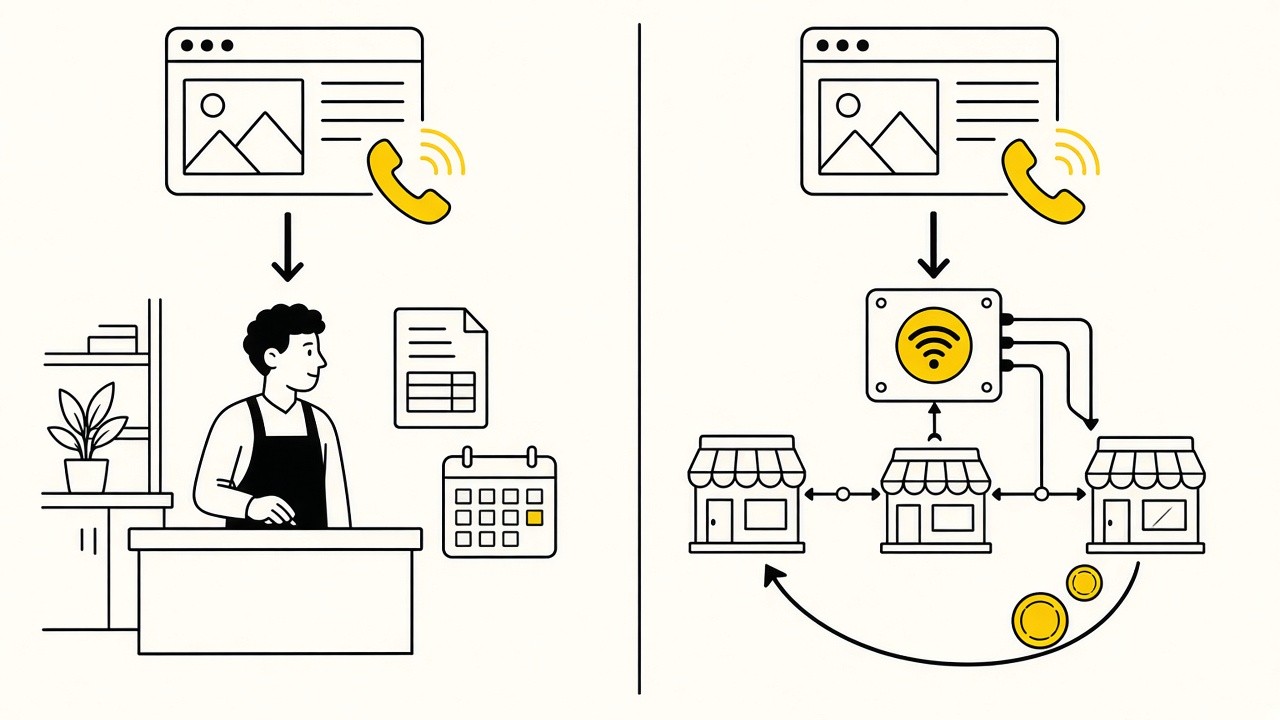
Rank and rent means you build a local website for one service in one city, rank it on Google, and rent it to a local business that wants those calls. You own the site, the domain and the phone number on it. The business pays you per call or a flat monthly fee, for as long as the arrangement lasts. Finding that business, closing the deal and sending the invoice every month are all on you. If you're new to the model, start with my guide on what rank and rent is.
In rank and rent, the local business pays you directly.
What Pay Per Call Affiliate Marketing Is
Pay per call affiliate marketing means you build and rank the same kind of local website, but the phone number on it comes from a pay per call network. When someone calls, the network routes the call to a buyer, a business with a live bid for that service in that zip code. If the call qualifies, the network pays you a fixed payout for it. You never talk to the buyer, never send an invoice and never chase a payment. My guide on what pay per call is covers the basics in more detail.
In pay per call, the buyer pays the network, and the network pays you.
Rank and Rent vs Pay Per Call: Side by Side
| Rank and rent | Pay per call | |
|---|---|---|
| Who finds the buyer | You | The network |
| How you get paid | The business pays you | The network pays you |
| Payout per call vs flat rent | Flat rent, $500 to $1,000 a month per site (our target range) | Fixed payout per paid call, $8 to $88 per site per month in our data |
| Time to first dollar | After the site ranks and you close a deal | After the site ranks and a call gets paid |
| Sales calls and invoicing | All yours | None |
| Risk when the buyer leaves | The rent stops until you find another | The network routes to other buyers, if any are live |
| Call tracking | You set it up to prove the volume | The network gives you the number and recordings |
| Best niches | High-ticket jobs | Niches with buyer coverage in your zip |
| Who it suits | People who like selling to local businesses | Builders who want to build and rank, not sell |
Most of these rows come down to one trade. Rank and rent can pay more per site, and pay per call asks less of you after the site ranks.
The Money: What a Call Is Worth to Each Side
This is the part most people never see. We transcribed calls in my network that converted, then put the job value to the business next to what the network paid us for that same call.
| Niche | Job value to the business | Paid to us per converted call | Multiple |
|---|---|---|---|
| Water damage | $2,500 (median) | about $121 | 21× |
| Roofing | $850 | $42 | 20× |
| Mold | $614 | $45 | 14× |
| Plumbing | $225 | $30 | 8× |
| HVAC | $125 | $34 | 4× |
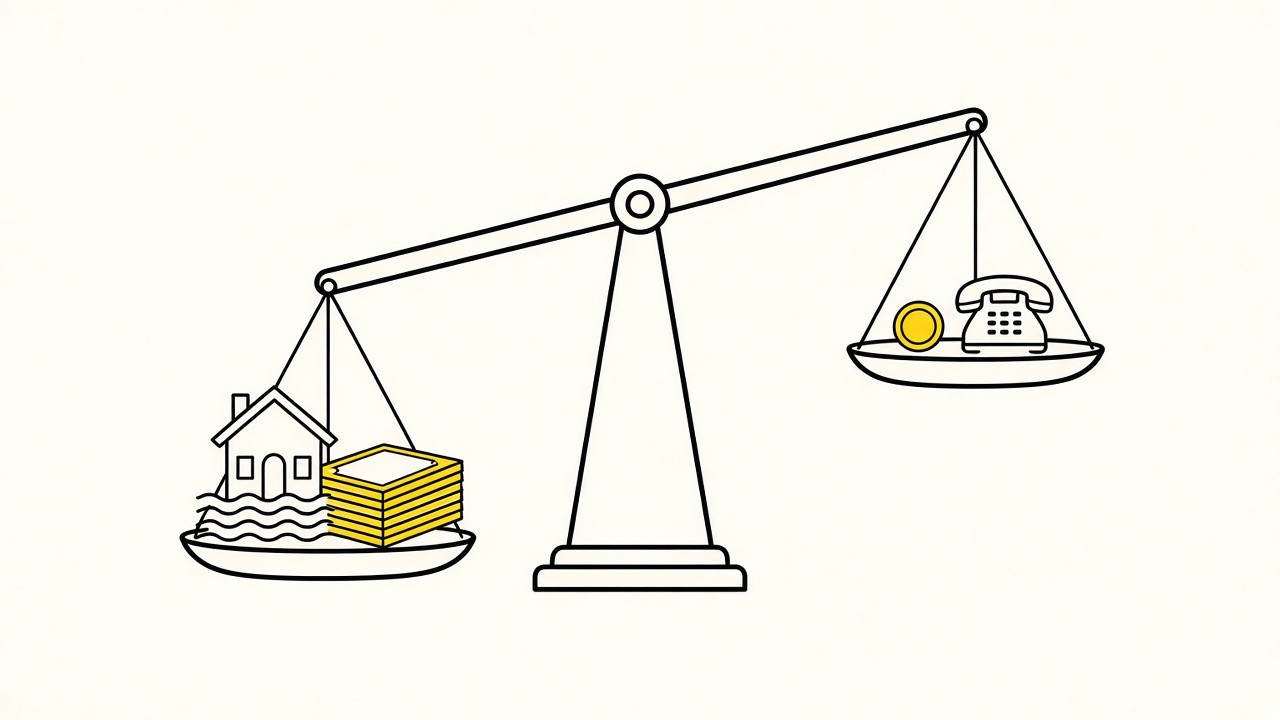
Here is the honest reading. The business keeps most of the value. A water damage company pays around $121 for a call that turns into a $2,500 job.
That gap is why a local business can afford $500 to $1,000 a month to rent a site that keeps ringing. It's also why a network payout is smaller. You get less per call, but you get it without a single sales call or invoice.
The wider network data says the same thing. Across 22,106 calls we analysed, the average payout per paid call was $121.13 for water damage, $45.42 for mold, $41.65 for roofing, $33.98 for HVAC, $29.72 for plumbing and $23.56 for electrical.
Not every call gets paid, though. The share of calls that got paid ranged from 44.9% for water damage up to 60.6% for HVAC (roofing 48.6%, mold 52.5%, electrical 57.9%, plumbing 59.5%). Notice that the niche with the biggest payout also has the lowest paid share.
Per site, pay per call earns $8 to $88 a month in our data. Our target for a rented site is $500 to $1,000 a month. Individual results vary.
Why I Start With Pay Per Call
If rent pays more per site, why don't I start there? Because the hard part of rank and rent comes after the website is built.
Here is why I start every new site with a network:
- No buyer hunting. I don't have to cold call a roofer and convince him that a site he has never heard of is worth a monthly fee.
- No invoicing. The network pays me. LeadSmart reports $614,878 paid to my community's publishers all-time.
- The network supplies the numbers and the recordings. I get a tracking number for the site and the call recordings.
- I learn which cities ring. Every site's call log tells me where the demand is, before I ever pitch a local business.
I'm not the only one doing this. Matthew Zivkovic, the founder of LeadSmart, said: "Abhishek Sood and his small band of LeadsXPro members were paid out almost $60,000 in the month of June from LeadSmart alone."
And one of our members, Roshan Tiwari: "I earned $19,000+ in the last 7 months from LeadSmart. 80% of the earnings come from Abhishek's tool." Individual results vary.
The two networks I trust are LeadSmart and Leads Magician. I compare them in my guide to pay per call affiliate networks.
What My Case Study Taught Me
From May to September 2026, we ran 72 US pay per call sites built on Local Sites Pro. They got 228,413 pages indexed, 347 tracked calls and 21 paid calls, for $1,238 paid out. One batch of 51 sites cost $652 and earned $422 in its first month, so 65% of the cost came back in month one. The full numbers are in the 51 pay per call sites case study.
The biggest lesson came from the calls we lost. 142 calls on the city sites rang and never reached a buyer.
Those calls were real demand with nobody on the other end. So now I check buyer coverage for the zip and the vertical before I build anything. And I keep in mind that fewer buyers are live on weekends and outside 8am to 5pm CST.
When Rank and Rent Makes Sense
Rank and rent makes sense once you have something to sell. For me, that means one of these:
- A site with a proven call log. You can show a business the calls, not a promise.
- A high-ticket niche. When one job is worth $2,500 to the business, a monthly fee is easy for them to justify. My rank and rent niches guide goes through which niches fit.
- A local business you already talk to. Selling is easier when they already know you.
Once a site's call log proves the demand, I see three options:
- Tell the network. Share the call volume and the geo with your network (for example LeadSmart), so they can work on buyer coverage for that area.
- Bring a local buyer to the network. If you know a business that wants those calls, bring them onto the network to raise your payout. Ask LeadSmart support how this works.
- Rent the site. Agree a flat monthly fee with a local business and handle the selling and invoicing yourself.
I don't pick one of these by default. Rank and rent is one of three options for a site that has already proven itself, and the other two keep the network doing the selling.
Step 1 Is the Same for Both: Pick the City and the Micro Niche
Whichever model you choose, the site has to rank and it has to ring. That starts with the city and the micro niche. I made a video on this as Step 1 of my pay per call series. It's in Hindi, and YouTube auto-dubs it to English.
Watch it on YouTube if the player does not load.
What the video covers:
- Picking a low-competition city with a population under about 150K
- Picking a high-demand micro niche, like water heater replacement, instead of a broad service
- Checking buyers for that city in the LeadSmart coverage explorer
- Researching the micro niche with ChatGPT and Google
- Checking demand over time with Google Trends
Coverage changes a lot by city. LeadSmart's bid coverage export from August 30, 2026 showed water damage bids up to $497.50 a call in the Phoenix metro, $452 in Austin, $442.50 in Seattle, $434 in Provo and $398 in Miami. You can check your own city in the LeadSmart bid coverage tool.
Keep in mind those are top bids. The network average for water damage was $121.13 per paid call. If you want the full walkthrough, read how to start pay per call.
How I Build the Site
I build these sites with Local Sites Pro, the builder I made for my own sites. Each site covers one narrow service in one city, nothing broad. Every call button uses the number I enter, so the network's tracking number sits on every button on every page. Hosting is free on my own Cloudflare account, and the AI cost is typically under $1 a site. Starter is $15 one-time for 3 sites, and Pro is $119 a year for unlimited sites. If you want to see how I set them up, here are the pay per call sites and rank and rent sites pages.
Quick Checklist
Final Thoughts
Rank and rent and pay per call need the same thing from you: a local site that ranks and rings. Rank and rent adds the selling, the invoicing and a buyer who can leave. Pay per call hands all of that to the network and pays you less per call.
So I start with pay per call. The network sells the calls while I learn which cities ring, and the sites that prove themselves keep every option open, including rent.
Same website, two ways to get paid. Start with pay per call, and keep rank and rent as your option.